What is homebirth?
Evidenced Based Birth explains who chooses homebirth, the parameters for safety, with statistics and plenty of links.
Is Homebirth safe?
Planned home birth: benefits, risks, and opportunities.
A new era of home birth research: Science and Sensibility
The American College of Obstetricians and Gynecologists is the governing body for standards of care for doctors. Known as ACOG, they refer to this study: …”It seems increasingly clear that impatience and easy access to many medical procedures at hospital may lead to increased levels of intervention which in turn may lead to new interventions and finally to unnecessary complications. In a planned home birth assisted by an experienced midwife with collaborative medical back up in case transfer should be necessary these drawbacks are avoided while the benefit of access to medical intervention when needed is maintained.”
A landmark study compares planned hospital birth versus planned homebirth.
This study compares postpartum hemorrhage between planned home birth against planned hospital birth, observational study of over 500,000 maternities in the UK.
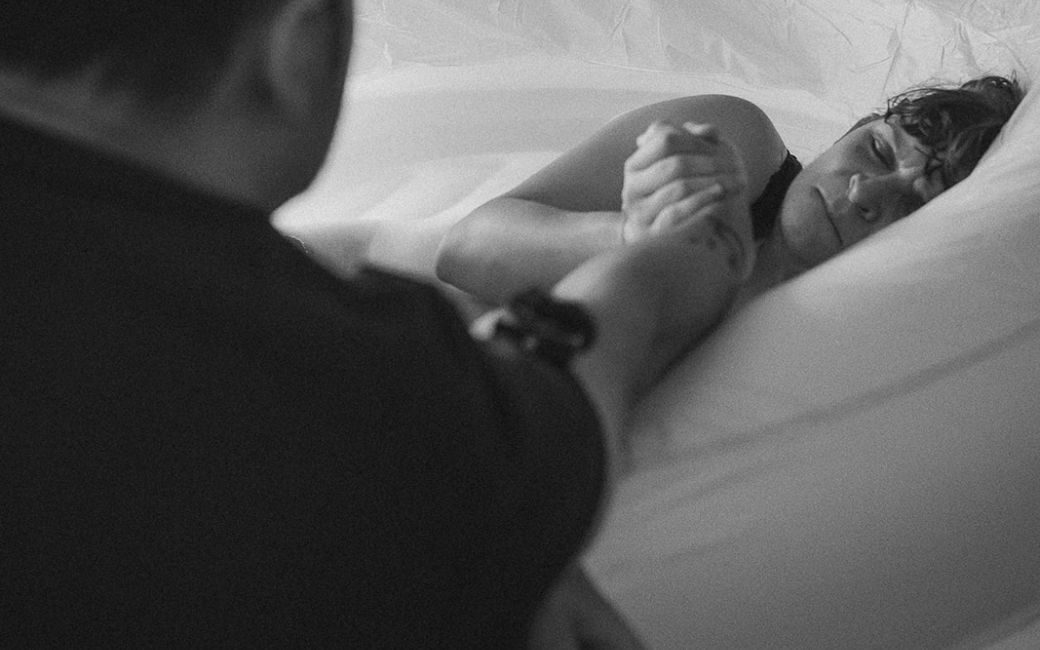
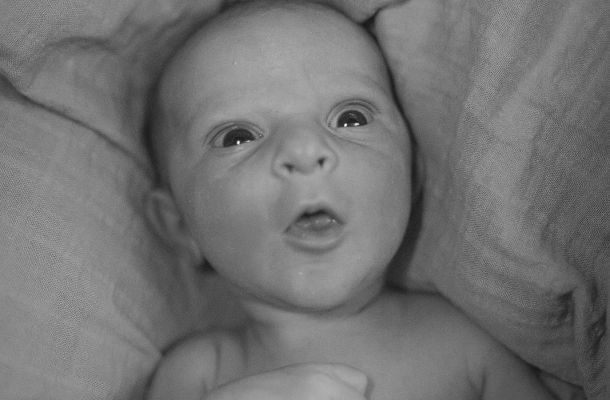

I was conducting a 37 week Birth Prep Meeting when I discovered this little friend accompanying Adam, my teaching doll. I had seen him before so I asked his mother @imjessicatapia about it. Rowan had always taken prenatals seriously…(swipe)
Happy International Day of the Midwife to all who have midwifed me in various ways over the years. This is a perfect opportunity to introduce my student, Breana @mysticmothering, who spotted me during a birth and connected on multiple levels, sharing a mutual intention. She, along with La Kiesha @agapebirth_wellness round out our practice beautifully. You will be seeing more of her and Kiesha here! #students #studentmidwife #friends
As a @SpinningBabies Aware Practitioner, I am keenly aware of the need for body work in pregnancy and postpartum. It is safe and supportive when done by someone who is specifically trained to support the pregnant and freshly delivered state.
My student Breana @mysticmothering was at a baby shower when a fellow midwife asked her who her Preceptor was. The midwife then asked “Is it true that she keeps her birth tubs cold?” Breana, surprised, said no and inquired about why I might do that. “To shock the babies, so that they breath”….something to that effect. As many of you are aware I enjoy the science aspect of waterbirth, but more importantly is the babies experience of their birth as well as the mother’s experience. I have never promoted cold water as that is such a shock to the nervous system. The typical range is anywhere from 96 , if it’s a hot day/room, to 98 degrees. Baby does not need to be shocked to breathe: they breathe when they are introduced to the atmosphere. Many of you know the rest as some of my videos explain it quite thoroughly. We got a good laugh from that!! Richard is performing step 8 from our notebook we leave at the home at the Birth Prep Meeting: smooth the creases out! #waterbirth #homebirth #naturalbirth
Baby Warren getting midwife love as he fell asleep in my arms during a prenatal! In case you wonder why we run late sometimes… 😬#midwifelife
Sometimes it is so hard being a midwife: the constant on-call, weird sleeping hours, to name two big ones. But at the final visit when you see these happy babies it’s so worth it. When I witness a woman have a birth on her terms, her way, it reminds me of the value of sacrifice. This mama had her HBA1C and rocked it! @nikkie_cossette #homebirth #vbac #ybac
That Super Moon 🌕 lulled 9 babies out in 9 days, many early! These lovely twin sisters arrived quickly, one in the shower and one in the birthing tub. More details to follow! Many thanks to my lovely friends @nicolemoralesmidwife and @victoria_md_birthing for their help and support! #twinsathome #homebirth #midwives
Took a minute to step out and thank those who have sent Birthday wishes! So excited to finish 57 years as I sit in a labor with a mama who is getting close to pushing. Thank you all!!
So….we got a dog! For those of you who know us will appreciate what a big deal this is. This is Hank and we knew him for 9 months before we got him. His family had to move and couldn’t keep all the animals they had. We had said “If you ever have to surrender Hank, we want first dibs”. It’s like he was always ours. He has been to 3 births, hanging out in the temperature controlled van. He LOVES the van. #midwifedog #miniaustralianshepard #deafdogsrock
@MallorieBedard3 had a difficult first planned homebirth that ended in a necessary cesarean, with a different midwife team. We had been booked solid when she sought us out the first time aound so we were thrilled to be able to shepherd her with her second pregnancy. Story coming soon! Thank you @doulatamij Splendid hvbac! #vbac #homebirth #midwives #daughters
When you attend a baby shower and see your other mamas and babies!
There are many paths to motherhood. Some are marked by joy, others by loss—and many by both. Every soul that passes through our lives leaves an imprint, shaping us as parents in ways seen and unseen.
So this happened…
Working with Surrogacy requires a unique awareness. How each phrase is worded matters in a whole new way. Things I’m used to saying to a pregnant mama don’t quite translate the same way when speaking to a mama through IVF. One mama is serving and surrendering, the other is receiving and preparing. The beautiful shared bond between these two mothers was the life blood of this birth. I’ve noticed that first babies of any type (for either parent) usually have longer labors that match the need for deep surrender and humility. I prepared Rachael for this reality knowing that though Rachael had children prior- this labor would be more akin to giving birth for the first time as energetically it was for Sam and Jesse to become parents for the first time. The Birth Day Prep class was tailored to address some of the subtle nuance this situation would call for so that on the birthing day we all felt as prepared as possible. Even the immediate postpartum was very interesting! I had one mama that I had to monitor for bleeding and recovery while guiding the other through establishing bonding. For keeping the uterus toned and tight, being around Zion was important for Rachael. Richard was indispensable in navigating the two very different needs of each of the two fathers present, providing them the grounding and support that was so needed.
How do midwives recuperate? We hug cows. @thegentlebarn
The fully narrated story of Barbie & David’s beautiful twin birth! If you’d rather read the story than listen, it’s in the comments.
Samantha was diagnosed with cancer, and lost her uterus to save her own life. Despite this tragedy, she was able to harvest her eggs and still realize her dreams of motherhood. She’s just welcomed her second home-birthed surrogate baby, Autumn. Her first born son, Zion, was carried by Samantha’s best friend. The two women labored together in the tub, culminating in Samantha catching her son as he was born. Stay turned for the full birth story with photos and videos of that magical moment!! We realize IVF and surrogacy can be controversial topics in the holistic & spiritual birth world, however this is not the forum for negative comments or debates and we thank you in advance for respecting Samantha’s journey.
Even a labor delivery nurse and her nurse practitioner husband choose to birth at home- what a powerful testament this is to the sacred beauty of natural birth. Swipe to see video of @mrshaileylopez peacefully ushering her daughter into this world in the comfort of her bedroom, embraced by warm water and surrounded by gentle lights and love.
Twin water babies, one breech, both born in their sacs and on TWO different days! Birth story coming soon ✨ 
Rowan and Mr. Richard listening attentively to Jessica explaining something to us. We adore all the kids, but this little soul took a special interest in Richard….(swipe)
#sons Meet baby Nathanial Charles!
These are unique phases where the body needs a different kind of care—slower, more intentional, and responsive to the nervous system.
I’ve recently started referring some of my clients to Cameron, and it’s been really supportive to have someone I trust to send people to.
The work is gentle, attuned, and focused on helping the body settle—not just working on tension, but supporting regulation and recovery as a whole.
If you’re currently pregnant, or postpartum and feeling like your body could use more support, this is something worth exploring. If you’re a person supporting someone who is pregnant you may need some self care too! Cameron, like us, is a fully mobile practice.
You can connect with him here → @knotsandhands.sd
Today, we honor all forms of mothering: the birthing, the grieving, the waiting, and the loving. May this day be a gentle reminder of our extraordinary capacity to nurture, protect, and grow life—in all its forms.
Me with my daughter @catcassio and my son serving in the Army @chapman.orr
I had the privilege of caring for my beautiful niece/client, @karamariefagan, and her partner, @zaidkdahhaj, throughout their pregnancy. During labor, after thoughtful discussion, we decided to transport due to a lack of descent and the need for pain management. As a former athlete with a background in gymnastics, soccer, diving, volleyball, and track, Kara faced unique challenges related to past injuries—something we cover in depth during our Birth Prep class so families understand all their options.
I accompanied them to the hospital, where it was later determined that a cesarean was necessary. At some point, Kara developed a fever, but the hospital team managed it well. Months later, I was shocked to learn that I was being investigated for negligence—not by the family, but by the hospital itself. Initially, I thought perhaps Kara’s dad, a doctor, had concerns, but that didn’t add up. He had attended our consultation and the Birth Prep class and understood exactly how we approach care.
It turns out the hospital initiated the investigation. I hadn’t fully realized that even when families choose to transport, hospitals can still take issue. @zaidkdahhaj may weigh in here, but this experience has been eye-opening in many ways.
Midwives, birth workers, families—have you experienced anything like this? Let’s talk about it.
This was truly a moving experience as we were able to expand our learning with such beautiful souls!
We recognize that surrogacy & IVF can be controversial topics, however this is not the forum for debate. Please respect the journeys of these beautiful families.
#surrogacy #IVF #homebirth #waterbirth #waterbaby #surrogate #midwife #midwifelife #babies #birthphotography #naturalbirth #birthstory #birth
Narrated by: @catcassio
Sound design & editing by: @cassio.creative
#waterbirth #naturalbirth #homebirth #twinbirth #twins #twinsisters #spinningbabies #breech #breechbirth #waterbaby #midwife #doula #midwifelife #birthstory
🌻🌻🌻🌻🌻🌻🌻🌻🌻🌻🌻🌻🌻🌻🌻
📸Photos & edits by @cassio.creative 📸
#ivf #ivfjourney #surrogate #homebirth #naturalbirth #waterbirth #waterbirthbaby #birthphotography #babypictures #postpartum #surrogatebaby #holistic #midwife #midwifery #birth #birthstory #doula #cancer
#homebirth #waterbirth #naturalbirth #labor #laboranddelivery #physiciansassistant #birth #itsagirl #midwife #midwifelife #birthvideo #gentlebirth #naturalbirthing
#homebirth #waterbirth #breechbirth #twins #homebirthmidwife #midwife #midwifelife #postpartum #babies


